How Long Does Headlight Restoration Last?
Cloudy, yellowed headlights are one of the most common reasons drivers in Glen Allen and the greater Richmond area book a restoration. But before paying for the service, almost everyone asks the same fair question: how long will it actually last?
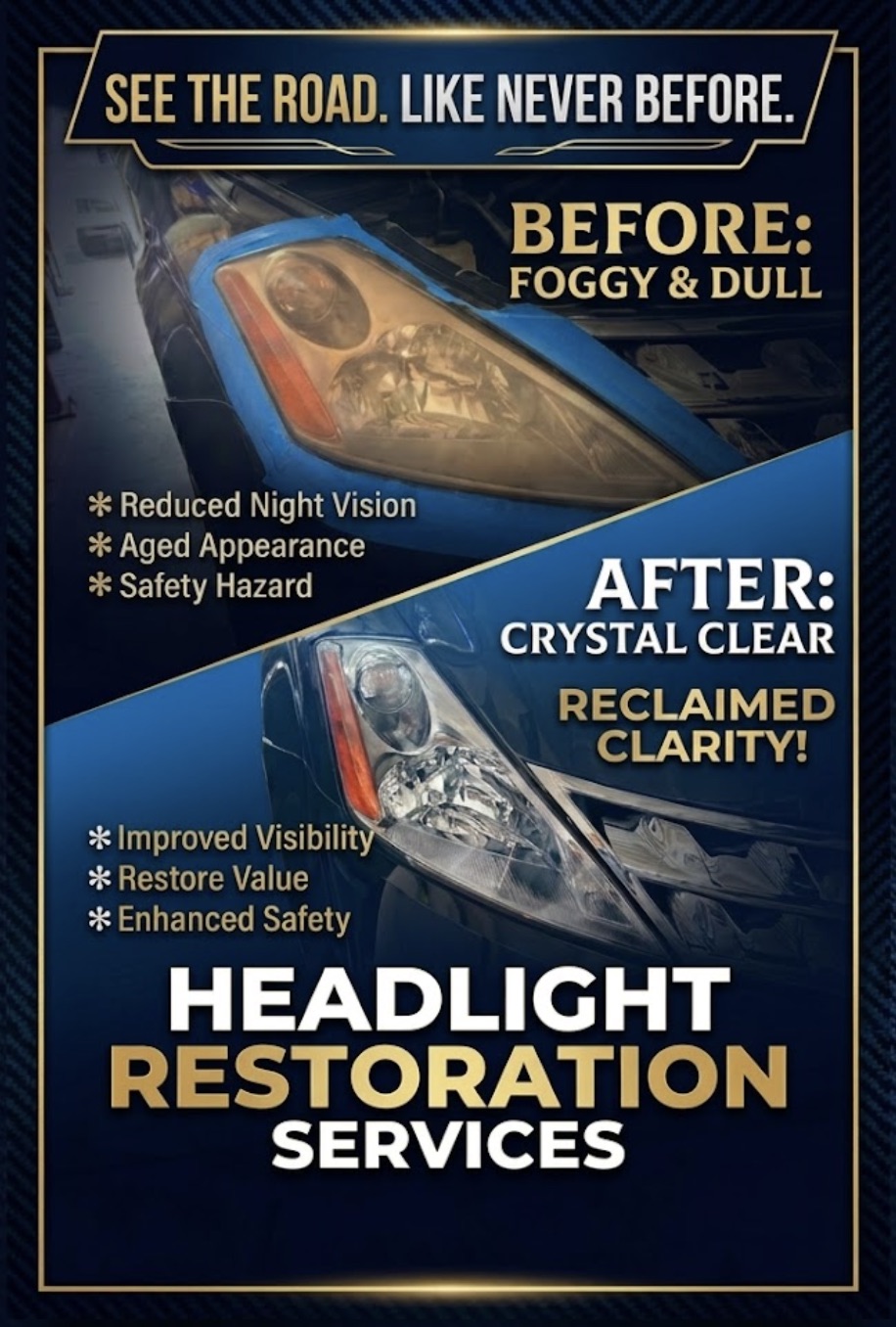
The honest answer is that it depends on a few things — the condition of the lens before treatment, the quality of the process used, and how the car is parked and cared for afterward. A quick parking-lot buff might fade in a couple of months, while a proper multi-stage restoration with a protective topcoat can keep your headlights clear for one to three years or more.
This guide breaks down exactly what affects that lifespan, how professional restoration differs from a DIY kit, and the simple habits that make the results last as long as possible.
Why Headlights Get Cloudy in the First Place
Understanding what causes the haze helps explain why restoration works — and why it eventually needs refreshing.
Modern headlights are made of polycarbonate plastic, not glass. Polycarbonate is tough and shatter-resistant, but it's vulnerable to the environment. From the factory, the lens is coated with a thin, clear UV-protective film. Over the years, that coating breaks down due to:
- UV exposure from sunlight, which oxidizes the plastic and turns it yellow or milky
- Road debris and grit, which create fine scratches that scatter light
- Heat from the bulb on the inside and the sun on the outside
- Chemical exposure from road salt, car wash detergents, and air pollution
Once that factory coating fails, the bare plastic underneath starts to oxidize. That oxidation is the cloudy, foggy layer you see. Restoration removes that damaged layer and seals the fresh surface beneath it — which is why a good seal matters so much for longevity.
How Long Does Professional Restoration Typically Last?
A quality professional restoration usually holds up for one to three years, and often longer with good care. The wide range exists because several real-world factors push the result toward one end or the other.
Factors that shorten the lifespan
- Constant outdoor parking, especially facing south or west where sun exposure is strongest
- Skipping the protective topcoat — sanding alone makes lenses look great for weeks, then they oxidize quickly again
- Severe pre-existing damage, such as deep cracks or internal moisture that no surface treatment can fix
- Harsh, frequent automatic car washes with abrasive brushes and strong chemicals
Factors that extend the lifespan
- A UV-resistant sealant or ceramic-style coating applied as the final step
- Garage or covered parking that limits daily UV exposure
- Gentle hand washing and periodic wiping of the lenses
- Catching the oxidation early, before the damage penetrates deep into the plastic
The single biggest variable is the final protective layer. The sanding and polishing make the headlight clear again, but it's the sealant that determines whether that clarity survives months of Virginia sun or fades by the end of summer.
Professional Restoration vs. DIY Kits
Drugstore and auto-parts headlight kits are inexpensive and tempting. They can genuinely improve a mildly hazy lens. The difference shows up in how long the result lasts.
What DIY kits typically do
Most kits include a few sanding pads and a polishing compound, and sometimes a small wipe-on sealant. With patience you can remove a lot of the surface oxidation. The problem is the finishing step:
- Many kits rely on a toothpaste-like polish that leaves a glossy but unsealed surface
- The included sealant, when there is one, is often a thin wax that wears off within weeks
- Without proper UV protection, the freshly exposed plastic oxidizes faster than before, because its original factory coating is now completely gone
It's common for a DIY job to look excellent for a month and then yellow again before the season is over.
What a professional restoration does differently
A proper restoration is a controlled, multi-stage process:
- Cleaning and masking the lens and surrounding paint to protect your vehicle
- Wet sanding through progressively finer grits to remove the entire oxidized layer evenly
- Polishing and buffing to restore optical clarity, not just surface shine
- Applying a durable UV-protective sealant or coating that bonds to the fresh plastic
The combination of removing the damage completely and sealing it properly is what produces results measured in years rather than weeks. It's also safer — even, professional clarity improves your actual light output at night, which is a real safety benefit, not just a cosmetic one.
How to Make Your Restoration Last Longer
Once your headlights are restored, a little maintenance protects the investment. None of this is difficult or time-consuming.
Park smart
UV light is the number-one enemy of headlight clarity. Whenever you can:
- Park in a garage or carport
- In a parking lot, choose shade or nose the car away from direct afternoon sun
- Consider a windshield/front sun shade on long hot-weather parking days
Even partial shade meaningfully slows oxidation over the months.
Wash gently and regularly
Keeping grime off the lenses prevents fine scratching and chemical buildup.
- Hand wash when practical instead of using brush-style automatic washes
- Use a mild automotive soap, not dish detergent, which can strip protective coatings
- Wipe the lenses dry with a clean microfiber cloth to avoid water spotting
Avoid abrasive shortcuts
Resist the urge to scrub cloudiness away with household products. Toothpaste, baking soda, and bug-and-tar removers can micro-scratch or strip the sealant, undoing the protection. If you notice early haze returning, a light maintenance polish or a re-seal is far gentler than aggressive scrubbing.
Refresh the protective coating
Ask whether a maintenance reapplication of the sealant is available. Topping up the protective layer every year or so is quick and inexpensive compared to a full restoration, and it keeps the clock from resetting back to bare, unprotected plastic.
Signs It's Time to Restore (or Re-Restore)
Headlight degradation is gradual, so it's easy to miss until you're squinting on a dark road. Watch for these signs:
- A yellow, amber, or milky tint to the lens
- Dimmer light output at night, especially in rain
- A rough or chalky texture when you run a finger across the surface
- Cloudiness that doesn't wipe off with normal washing
- Headlights that look noticeably worse than the rest of the car's exterior
Catching these early matters. Once oxidation penetrates deep into the plastic — or if moisture gets inside the housing or the lens cracks — surface restoration may no longer be enough, and replacement becomes the better option. Acting at the early-haze stage keeps you firmly in restoration territory, which is dramatically cheaper than buying new headlight assemblies.
Restoration vs. Replacement: Which Makes Sense?
For the vast majority of cloudy headlights, restoration is the smarter choice. Replacement headlight assemblies can cost several hundred dollars each, plus labor, and on many vehicles the bumper or grille has to come off to install them. Restoration addresses the actual problem — surface oxidation — at a fraction of that cost.
Replacement only becomes the right call when the damage is structural rather than cosmetic:
- Deep cracks through the lens
- Persistent internal condensation or water intrusion
- A broken mounting tab or failed housing seal
- Electrical or reflector damage inside the assembly
If your headlights are simply foggy, yellowed, or dull, restoration will almost always bring them back — and at a price that makes far more sense. For a deeper breakdown, see our guide on headlight restoration vs. replacement.
The Bottom Line for Glen Allen Drivers
Professional headlight restoration typically lasts one to three years, and longer with covered parking, gentle washing, and a quality protective coating. The work itself matters, but so does what happens afterward: the sealant and your day-to-day habits do most of the heavy lifting on longevity.
Compared to a DIY kit that may fade in weeks, or replacement assemblies that cost hundreds, a proper restoration is the clear value — restoring both the look of your vehicle and your visibility and safety on the road.
If your headlights are looking hazy, the best time to act is at the first sign of yellowing, while the damage is still on the surface. A timely restoration keeps your lights bright, your nighttime driving safer, and your car looking years younger.
Headlights starting to yellow?
Catch it at the surface stage. We restore foggy, oxidized lenses to factory-clear in about 60 minutes, from $79 — finished with a UV sealant pass. Glen Allen, VA & Greater Richmond.